WEBSITE DISCLOSURES
1. BASIC DISCLOSURES
1.1 Integration of sustainability risks in the investment decision-making process (art. 3(1))
Capital 4 Impact ApS, CVR-no. 44710102 (the “Fund Manager”) is an Alternative Investment Fund Manager (“AIFM”) registered with the Financial Supervisory Authority of Denmark managing the alternative investment fund (“AIF”) C4I MENA FUND I K/S, CVR-no. 46120841 (the “Fund”).
Awareness of sustainability risks is built into all of the Fund Manager’s key processes, from screening and due diligence of potential target companies to portfolio governance and monitoring of portfolio companies and shall always comply with the Fund’s investment policy. Thus, the awareness and integration of sustainability risks are firmly integrated in the Fund Manager’s investment decision and the processes in relation hereto.
The Fund Manager has looked at the sustainability risks likely to have a negative impact on the returns of the Fund.
To ensure that such risks are sufficiently reduced, the Fund Manager will perform an initial screening before entering an investment to make sure that the investment opportunity does not engage with any companies on the Prohibited Activities List (included at the end of these website disclosures).
If the business activity falls within any of the activities on the Prohibited Activities List, it will be rejected immediately, and the Fund Manager will abstain from moving further with the investment opportunity.
If the business activity does not fall within any of such activities, the Fund Manager will proceed its due diligence to screen and identify any additional, potential sustainability risks which due to the Fund’s investment scope typically cover:
- Environmental risks
- Waste and affluent management
- Toxic and hazardous materials and waste
- Air emissions
- Health Hazards
- Noise levels/smells/irritants
- Fire risks
- Occupational health and safety (OHS)
- Social and Labor Issues and Impact on Community
- Labor and working conditions
- Labor representation
- Relations with local communities
- Internal and external grievance mechanisms
- Changes in employment regulations
- Regulatory Compliance and Liability
- Health, Safety and Environment permits and approvals
- No Health, Safety and Environment liabilities due to water/land contamination
- Accidents (spills, fires)
- Results of any environmental inspection made
During the investment phase, the Fund Manager uses the due diligence findings to ensure that the relevant sustainability risks are identified, assessed and addressed in the investment decision as well as the legal documentation pertaining to the investment, if a decision to invest is made. This includes obligating the portfolio companies to regularly report on the sustainability risks and how they are mitigated.
Following the investment and during the holding period, the Fund Manager will do timely updates on performance of the portfolio company to mitigate and report on sustainability risks. Relevant information will be collected from the portfolio company through a reporting process. This ensures that the most material sustainability risks relevant to the Fund are identified and managed. The process is implemented and overseen by the investment manager (with the Fund Manager) responsible for the portfolio company.
The likelihood of that the sustainability risks will have a negative impact on the returns of the Fund is assessed to be low.
1.2 Remuneration policies (art. 5)
The Fund Manager does not have remuneration policies, and the Fund Manager’s remuneration structures are not linked to the integration of sustainability risks. Thus, they are not structure to the effect that they encourage excessive risk taking with respect to sustainability risks.
2. ADDITIONAL DISCLOSURES FOR fund managers managing funds with sustainable investments as its objective (art 10)
‘Summary’:
English:
The Fund makes sustainable investments with a social objective and, therefore, is obliged to disclosure under SFDR Article 9, 10 and 11. The sustainable investment objective of the Fund is job creation and economic growth in alignment with SDG 8 (“Decent Work and Economic Growth”). The Fund invests exclusively in SMEs in Morocco, Tunisia, Egypt, and Jordan, providing structured mezzanine financing through a Shareholder Loan Instrument (“SLI”) that combines equity, fixed-interest loans, and revenue participation. This approach enables SMEs to scale while maintaining ownership control and ensures predictable returns for the Fund’s investors.
The Fund applies strict sustainability criteria and adheres to the “Do No Significant Harm” principle. All investments undergo Environmental and Social Due Diligence (ESDD) using a risk categorization system (A, B, C). Category A projects—those with significant adverse impacts—are excluded. The Fund also screens against a Prohibited Activities List and requires compliance with good governance practices, including sound management structures, employee relations, and tax compliance. Portfolio companies must adopt policies on anti-corruption, safeguarding, and whistleblowing and report on any violations.
Every investment of the Fund will be made with the intention of creating or maintaining jobs, and foster revenue growth of the portfolio companies, in alignment with SDG 8 “Decent work and economic work”. The Fund targets between 1400-2600 jobs created or maintained depending on the size of the Fund and an average revenue growth of 12 % across the portfolio. Impact indicators associated to these two social impact outcomes (job creation and economic growth) will deliver measurable results throughout the lifetime of the Fund. The Fund will invest in SMEs across several economic sectors, particularly those which are intensive in labour, such as manufacturing and services and are expected to show the highest potential for job generation. All targeted businesses are ran by business owners who have identified opportunities to expand their businesses but cannot access the financing required to realize the opportunity. Providing access to finance for SMEs that face barriers in traditional financial markets will therefore enable the growth and unlock the job creation potential in alignment with the sustainable investment objective. The Fund is sector agnostic but will focus the portfolio allocations on specific types of companies within green technologies, youth-led enterprises, women owned/lead/benefitting enterprises and/or export-oriented enterprises.
By allocating capital across these four thematic areas, the overall portfolio risk is reduced. Export-oriented companies are generally better equipped to manage currency-fluctuation risks, while investments in women’s economic empowerment contribute to improved social outcomes for society fostering resilience. Youth-led companies add value as young entrepreneurs are key drivers of innovation and change, and green technologies generate positive environmental impacts, particularly in addressing climate challenges.
While the Fund Manager has no consideration of adverse impacts of investment decisions on sustainability factors pursuant to SFDR art. 7(2), relevant principal adverse impact (“PAI”) indicators, such as indicators within social or employee wellbeing will be considered during the Do No Significant Harm test and addressed through the technical assistance contributions made available to portfolio companies. No benchmark index has been designated; attainment of the sustainable investment objective is assessed through the Fund’s methodologies and sustainability indicators. Limitations in emerging market data are mitigated through close engagement, annual site visits, and corrective action plans. Engagement policies include ESG action plans and technical assistance for portfolio companies to improve their governance and sustainability practices.
Danish:
C4I MENA FUND I K/S (”Fonden”) har bæredygtige investeringer inden for det sociale område som sit formål og er derfor forpligtet til at oplyse i henhold til SFDR artikel 9, 10 og 11. Fondens bæredygtige formål er jobskabelse og økonomisk vækst i overensstemmelse med SDG 8 (“Anstændigt arbejde og økonomisk vækst”). Fonden investerer udelukkende i SMV’er i Marokko, Tunesien, Egypten og Jordan og tilbyder struktureret mezzaninfinansiering via et Shareholder Loan Instrument (“SLI”), som kombinerer egenkapital, fastforrentede lån og indtægter. Denne tilgang gør det muligt for SMV’er at skalere uden at miste ejerskabskontrol og sikrer samtidig forudsigelige afkast for Fondens investorer.
Fonden anvender strenge bæredygtighedskriterier og overholder princippet om “Do No Significant Harm”. Alle investeringer gennemgår en miljø- og social due diligence (ESDD) baseret på et risikokategoriseringssystem (A, B, C). Projekter i kategori A – med væsentlige negative sociale eller miljømæssige påvirkninger – udelukkes. Fonden screener desuden mod en liste over udelukkede aktiviteter og kræver overholdelse af god selskabsledelse, herunder solide ledelsesstrukturer, medarbejderrelationer og skatteoverholdelse. Porteføljeselskaber skal implementere Fondens politikker for antikorruption, beskyttelse af børn og unge og whistleblowing samt rapportere om eventuelle overtrædelser.
Alle investeringer foretages med henblik på at skabe eller opretholde arbejdspladser og fremme omsætningsvækst i porteføljeselskaberne i overensstemmelse med SDG 8. Fonden har som mål at skabe eller opretholde mellem 1.400 og 2.600 jobs afhængigt af fondens størrelse samt opnå en gennemsnitlig omsætningsvækst på 12 % på tværs af porteføljen. Impact-indikatorer knyttet til disse to sociale mål (jobskabelse og økonomisk vækst) vil levere målbare resultater gennem fondens levetid. Investeringerne vil ske i SMV’er på tværs af flere økonomiske sektorer, særligt arbejdskraftintensive brancher som produktion og service, der forventes at have størst potentiale for jobskabelse. Alle investeringsvirksomhederne drives af ejere, der har identificeret vækstmuligheder, men som ikke har adgang til den nødvendige finansiering for at realisere disse. Ved at give adgang til kapital for SMV’er, der møder barrierer på traditionelle finansielle markeder, muliggør Fonden vækst og frigør jobskabelsespotentialet i overensstemmelse med det bæredygtige investeringsmål. Fonden er sektorneutral, men vil fokusere porteføljeallokeringer på virksomheder inden for grøn teknologi, ungdomsledede virksomheder, kvindeejede/-ledede/-beneficerende virksomheder samt eksportorienterede virksomheder.
Ved at allokere kapital på tværs af disse fire tematiske områder reduceres den samlede porteføljerisiko. Eksportorienterede virksomheder er generelt bedre rustet til at håndtere valutakursrisici, mens investeringer i kvinders økonomiske empowerment bidrager til forbedrede sociale resultater og øget modstandsdygtighed. Ungdomsledede virksomheder skaber værdi, da unge iværksættere er centrale drivkræfter for innovation og forandring, og grønne teknologier genererer positive miljømæssige effekter, især i forhold til klimaforandringer.
Selvom Fund Manager ikke tager negative indvirkninger på sine investeringer i betragtning i henhold til SFDR art. 7(2), bliver relevante Principal Adverse Impact (“PAI”)-indikatorer, såsom indikatorer relateret til sociale forhold og medarbejderrettigheder, overvejes i forbindelse med Do No Significant Harm testen og adresseret gennem technical assistance faciliteten stillet til rådighed for porteføljeselskaber. Der er ikke udpeget et benchmarkindeks; opfyldelsen af det bæredygtige investeringsmål vurderes via Fondens egne metologi og bæredygtighedsindikatorer. Begrænsninger i data fra vækstmarkeder i investeringslandende afhjælpes gennem tæt engagement med porteføljeselskaberne, årlige site visits og handlingsplaner. Engagementpolitikker omfatter ESG-handlingsplaner og teknisk bistand til porteføljeselskaberne for at forbedre deres governance og bæredygtighedspraksis.
‘No significant harm to the sustainable investment objective’:
To ensure that no investments will cause significant harm (“DNSH”) to the Fund’s social objectives, every investment will be assessed based on following criterias.
- Potential investments are assessed against the DNSH criteria to ensure they do not cause significant harm to environmental or social objectives. This is included in the Environmental and Social Due Diligence (ESDD) Risk Assessment Tool developed by the Fund Manager which will be conducted for all investments and used as a baseline for ongoing monitoring during the investment period. The Risk Assessment Tool includes questions on General Risks, Environmental Health and Safety Risks and Social Risks. The results of the questionnaire will guide the team in applying the appropriate categorization (i.e., Category A, B, or C) as well as identifying areas for potential positive environmental and social development, if any.
- Companies that have significant adverse environmental and/or social impacts that are irreversible, sensitive, diverse, or unprecedented in the absence of adequate mitigation measures, are classified as Category A. Such companies are considered highrisk.If the company is assessed as category A, the investment will reach the DNSH threshold and thus not qualify as a sustainable investment.
- In the event of environmental and social findings that require follow up by the company, such company will qualify as Category B, and the Fund Manager will either agree on a remedy plan with the company, or an action plan within a timeframe for the company to undertake proper mitigation measures. Financing of Category B companies may be approved with the remedy plan placed as a condition precedent before the investment can be completed. Companies likely to have minimal adverse and/or no adverse future environmental and/or social impact (Category C companies) will be assessed annually, but will not require any immediate additional actions.
- The DNSH threshold together with sustainability risks and mitigation measures will be monitored through annual questionnaires, site visits to the companies and meetings with the owner of the business as part of the investment monitoring procedures as well as the ESDD. The primary purpose of the site visit is to monitor performance of the business while simultaneously an opportunity to (a) identify potential environmental and social issues that may represent a risk to the company’s business activities if left unmitigated, and (b) review the company’s compliance with the Fund Manager’s environmental and social requirements. Frequency of site visits depends on the risk profile of the Company. At least one site visit per year is required for any portfolio company.
- Relevant Principal Adverse Impact (PAI) indicators, such as the additional indicators in Table 3 within social or employee wellbeing can be addressed through the technical assistance contributions made available to portfolio companies.
- The Fund Manager will ensure that the investments are aligned with the OECD Guidelines for Multinational Enterprises and the UN Guiding Principles on Business and Human Rights, incl. the principles and rights set out in the eight fundamental conventions identified in the Declaration of the International Labour Organisation on Fundamental Principles and Rights at Work and the International Bill of Human Rights by incorporating the Fund Manager’s Anti-corruption policy, Safeguarding Policy, Risk Management Policy and Whistleblowing Policy in the portfolio companies with an obligation to report on any violation or suspension of violation of said policies. The Fund Manager will screen all portfolio companies through its Know You Customer and Anti-Money laundering Policy to ensure that no portfolio companies are engaged in illegitimate or illegal activities. Moreover, as part of the ESMS Policy all portfolio companies will be assessed on their labour and working conditions, environmental, health and safety and ESMS resources to ensure compliance with the UN Guiding Principles on Business and Human Rights and DNSH principle and ensuring that the Fund cannot invest in companies that doesn’t uphold the minimum recognized safeguards.
- Portfolio companies will be required to report on any violations on incorporated policies together with environmental and social risks ongoing to ensure compliance throughout the engagement period.
‘Sustainable investment objective of the Fund’:
Every investment of the Fund will be made with the intention of creating or maintaining jobs, and foster revenue growth of the portfolio companies, in alignment with SDG 8 “Decent work and economic work”. The Fund targets between 1400-2600 jobs created or maintained depending on the size of the Fund and an average revenue growth of 12 % across the portfolio. Impact indicators associated to these two social impact outcomes (job creation and economic growth) will deliver measurable results throughout the lifetime of the Fund. The Fund will invest in SMEs across several economic sectors, particularly those which are intensive in labour, such as manufacturing and services and are expected to show the highest potential for job generation. All targeted businesses are ran by business owners who have identified opportunities to expand their businesses but cannot access the financing required to realize the opportunity. Providing access to finance for SMEs that face barriers in traditional financial markets will therefore enable the growth and unlock the job creation potential in alignment with the sustainable investment objective. The Fund is sector agnostic but will focus the portfolio allocations on specific types of companies within green technologies, youth-led enterprises, women owned/lead/benefitting enterprises and export-oriented enterprises.
By allocating capital across these four thematic areas, the overall portfolio risk is reduced. Export-oriented companies are generally better equipped to manage currency-fluctuation risks, while investments in women’s economic empowerment contribute to improved social outcomes for society fostering resilience. Youth-led companies add value as young entrepreneurs are key drivers of innovation and change, and green technologies generate positive environmental impacts, particularly in addressing climate challenges.
‘Investment strategy’:
The Fund provides long-term, incentive-aligned financing to SMEs in Morocco, Tunisia, Egypt, and Jordan using a structured mezzanine instrument known as the Shareholder Loan Instrument (SLI). The instrument blends fixed-interest repayment with a revenue participation feature and a minor equity component subject to pre-agreed repurchase terms. This allows SMEs to scale while maintaining control, and it ensures predictable distributions to investors.
The Fund will target companies with a potential to grow and create or maintain jobs. The companies will have an annual revenue around €1,5 million, earnings before interest, taxes, depreciation, and amortization around 15 %, profitability in 3 of the last 5 years, post-investment revenue growth potential above 10 % p.a, low pre-investment leverage. The Fund aims to construct a portfolio of 40–60 SMEs, diversified across geographies and sectors.
The binding sustainability elements for the Fund Manager to consider an investment in a portfolio company is that the company has the potential for creating or maintaining jobs and revenue growth, is not represented on the Prohibited Activities list, doesn’t categories as a category A high risk company, is cleared through the due diligence process and ensures a minimum good governance practice of incorporating the necessary Fund Manager policies and procedures. This includes assessments of aspects relating to sound management structures, labour and working conditions and environmental health and safety. Throughout the engagement period the companies must ensure tracking of the binding elements and report annually to the Fund Manager.
The portfolio company and the Fund Manager will define impact targets for jobs created during the engagement period to ensure that the economic growth reflects in more jobs. As part of the investment strategy, the Fund will source its potential companies through UNDP’s Green Growth Accelerator. This provides the Fund with cohorts of companies in the targeted geographies that has been provided with acceleration services to be better equipped for growth and investments. To ensure that the company is fit for investment, the Fund Manager will do pre-screening of companies for qualified leads. The qualified leads will hereafter go through a due diligence process to conclude whether the company is a strategic fit with the Fund Manager’s mission and the Fund’s investment objective.
A separate and parallel Technical Assistance (“TA”) Facility will be established by the Fund Manager to support the SMEs that obtain financing from the Fund. The TA facility will offer support in a wide range of technical disciplines tailored to the specific business needs of individual SMEs to support them to realise their growth potential and potentially to address PAI indicators. The Fund Manager expects accounting, financial management, and marketing to be the most needed forms of TA. However, other important areas such as improved corporate governance, improved occupational health and safety (OHS), improvement of capabilities in handling E&S and adoption of new technologies and processes that have a positive impact on the environment and climate will also be a key focus of the TA facility. In these ways the TA funds will contribute to sustainable growth of the SMEs in which the Fund invests. During the holding period the portfolio companies will be required to report on the TA deployments and good governance practices on an annual basis.
‘Proportion of investments’:
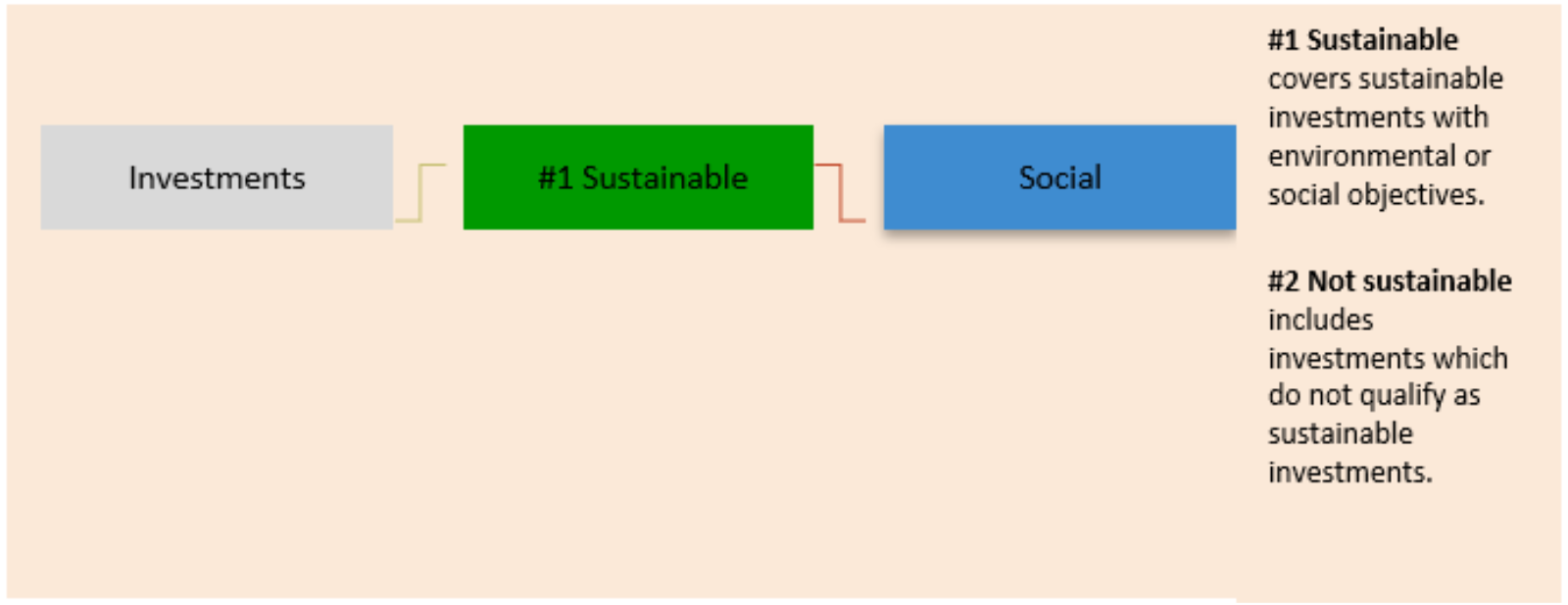
100 % of the Fund’s investments will be defined as sustainable investments with a social objective, i.e. investments used to meet the sustainable investment objective in accordance with the binding elements of the investment strategy.
‘Monitoring of sustainable investment objective’:
Portfolio companies will report on the number of jobs created and maintained in the engagement period, on revenue growth, on DNSH risks, good governance practices and the TA support through a management reporting system. Regular portfolio reviews through the evaluation of financial performance, market conditions, and operational factors will be conducted to assess the performance of each investment. The Fund Manager will conduct site visits to the portfolio companies and meet with the owner of the business as part of the investment monitoring procedures. The primary purpose of the site visit is to monitor performance of the business while simultaneously providing an opportunity to (a) identify potential environmental and social issues that may represent a risk to the portfolio company’s business activities if left unmitigated, and (b) review the portfolio company’s compliance with the Fund’s environmental and social requirements. At least one visit is required prior to disbursement of funds to confirm if the purpose of investment was satisfied and to follow up on any covenants or any corrective action plans. During the engagement period based on the portfolio company’s risk profile, the Fund Manager will conduct at least one visit per site a year to update on any developments. No external visits or controls will be involved in the monitoring.
‘Methodologies’:
The Fund will track number of jobs created or maintained. The indicator measures number of full-time equivalent workers, as per local definition, working for the portfolio company at the end of the reporting period. The indicators include full-time equivalent work by seasonal, contractual and part-time workers.
The number or jobs created or maintained will be monitored by portfolio companies typing in number of full-time employees by the end of the reporting period. The Fund Manager will have access to review employment contract to validate the reported numbers.
The indicator used to measure average revenue growth will be percentage growth in value of the organization’s revenue from one reporting period to another.
‘Data sources and processing’:
The data used to measure the attainment of the sustainable objective is sourced from portfolio companies. Such data is assessed prior to making an investment to ensure that the baseline quality is sufficient to support the investment case and business model. At the point of investment, relevant indicators and target values are established and mutually agreed upon with the company. The company reports on these agreed indicators and target on an annual basis through a management and reporting system that allows the Fund Manager to consolidate data to compare, monitor trends, track consistency etc. throughout the engagement period. The data will be controlled by the investment manager from Fund Manager responsible for the portfolio company and regular meetings with portfolio companies will be held to maintain communication and gain insight into their performance. These events could be scheduled quarterly or biannual with management teams and include site visits. All data will be obtained directly from the portfolio companies, and it is therefore expected that the proportion of data to be estimated is low.
‘Limitations to methodologies and data’:
Sustainability data provided by companies in emerging markets has inherent risks. The data may be incomplete, incorrect or unavailable which presents a risk that the reported impact is being assessed wrongly and the impact targets harder to reach. To best manage this risk the Fund Manager will do thorough due diligence assessments and site visits before approving investments. During the engagement period the Fund Manager will be in ongoing contact with the portfolio company and conduct site visits at least annually based on the company’s risk profile. The relatively small sample of expected 40-60 portfolio companies allow the Fund Manager to have a closer contact with the engaged companies.
Ongoing actions will be taken to address limitations, and the Fund Manager will work closely with the portfolio companies. The Fund will regularly review the methods and data used to assess the attainment of the sustainable investment objective of the Fund to ensure the most up-to-date approach possible. In the event of significant limitations, measures deemed appropriate for the specific limitation will be taken to overcome them.
‘Due diligence’:
The due diligence process is conducted prior to all investments and consists of an initial pre-screening with the most promising companies being elected to go through a more detailed risk analysis. The Environmental and Social risk assessment consist of a risk categorisation of potential environmental and social impact for all portfolio companies. The aim is to identify as early as possible the risk of adverse environmental and social impacts to deem if such impacts will preclude companies from the Fund. The first action in the screening process is to review if the SME appears on the Prohibited Activities List. The businesses that fall within any of the activities on the Prohibited Activities List will be rejected immediately, and the Fund Manager will abstain from moving further with the investment opportunity.
For all portfolio companies not on the Prohibited Activities List, the Fund will do Environmental and Social Due Diligence (ESDD) using a risk assessment tool to screen and categorize the companies as Category A (High risk), B (Medium risk) and C (Low Risk). The risk categorization will decide the further due diligence steps and mitigation measures. Category A companies are assessed to reach the DSNH threshold and are therefore also excluded from investment. For Category B and C companies, the Fund Manager will identify mitigation strategies and areas of improvement, including but not limited to the use of TA resources. Potential sustainability risks which due to the Fund’s investment scope typically cover:
- Environmental risks
- Waste and affluent management
- Toxic and hazardous materials and waste
- Air emissions
- Health Hazards
- Noise levels/smells/irritants
- Fire risks
- Occupational health and safety (OHS)
- Social and Labor Issues and Impact on Community
- Labor and working conditions
- Labor representation
- Relations with local communities
- Internal and external grievance mechanisms
- Changes in employment regulations
- Regulatory Compliance and Liability
- Health, Safety and Environment permits and approvals
- No Health, Safety and Environment liabilities due to water/land contamination
- Accidents (spills, fires)
- Results of any environmental inspection made
As mentioned above at least one visit is required prior to disbursement of funds. In the event of environmental and social findings that require follow up by the portfolio company, the Fund Manager will either put a remedy plan with the SME, or an action plan within a timeframe for the SME to undertake proper mitigation measures. In other instances, the financing may be approved with the remedy plan placed as a condition precedent before disbursement. The portfolio company and the Fund Manager will define impact targets for jobs created or maintained during the engagement period to ensure that the economic growth also reflects in more jobs.
‘Engagement policies’:
In the event of sustainability-related controversies, the Fund will engage with the portfolio company to mitigate the impact of such incident. The Fund Manager will implement an ESG action plan and have the option to allocate TA to portfolio companies to improve ESG.
‘Attainment of the sustainable investment objective’:
No applicable benchmark is currently existing. Therefore, no index has been designated as a reference benchmark. The sustainable investment objective is achieved based on the investment strategy and the elements described in this disclosure, incl. the listed sustainability indicators.